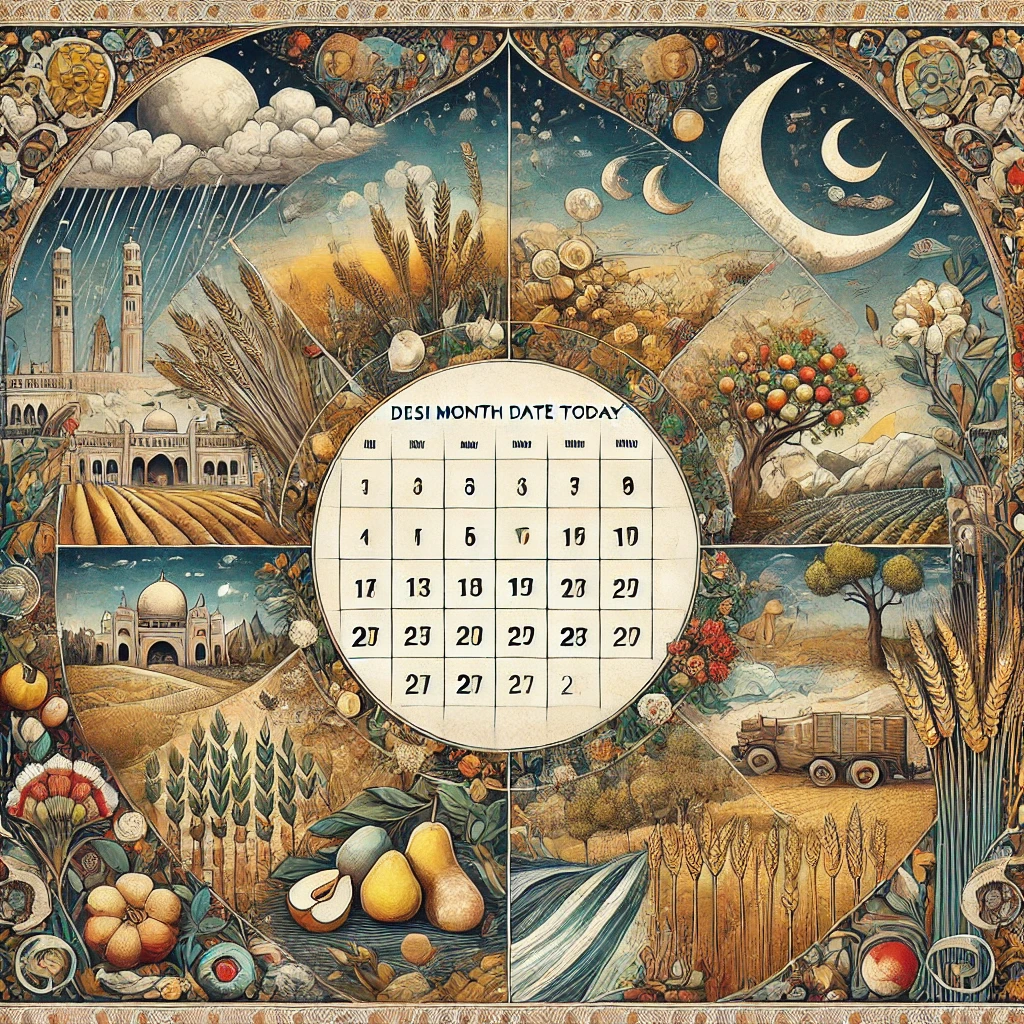
In Pakistan, the traditional or “desi” months have their own ancient and culturally significant system, which is still used in various regions of the country. These months have been followed since ancient times and are closely related to agriculture, weather patterns, and the lunar cycle. If you’re looking for the Desi Month Date Today, it’s important to note that the start and end dates of these months are not fixed and can vary each year based on the lunar calendar. Here are the 12 desi months of Pakistan:
- Chet
- Vaisakh
- Jeth
- Harh
- Sawan
- Bhadon
- Asu
- Katak
- Maghar
- Poh
- Magh
- Phagan
Today Desi Month Date
Today Desi Month Date in Pakistan refers to the current date according to the Islamic lunar calendar. This calendar, consisting of 12 lunar months like Muharram and Ramadan, is used for religious observances and cultural events. It’s an essential aspect of Islamic traditions in Pakistan.
| Month Name | Sawan |
| Punjabi Date Today | 21 Sawan |
According to the English Calendar
| 5 August 2026 |

Desi Months as per Regular Calendar
The desi months are different from the English or Gregorian calendar. Their start is based on the sighting of the moon, which means they do not begin and end on fixed dates. Below are approximate dates that indicate when each desi month typically begins in the English calendar:
- Chet – Late March or early April.
- Vaisakh – Late April or early May.
- Jeth – Late May or early June.
- Harh – Late June or early July.
- Sawan – Late July or early August.
- Bhadon – Late August or early September.
- Asu – Late September or early October.
- Katak – Late October or early November.
- Maghar – Late November or early December.
- Poh – Late December or early January.
- Magh – Late January or early February.
- Phagan – Late February or early March.
These dates are approximate and depend on the sighting of the moon each year. As a result, these months fall on different dates in the English calendar every year.
Desi Month Names
Chet
- Importance: Chet is the first month of the traditional desi calendar and is associated with the spring season. This month holds great significance in agriculture as new seeds are sown during this time. For people, it represents a month of new beginnings and hope. In Sufi and folk traditions, this month is seen as a symbol of prosperity and the beauty of life.
| Month | Start Date | End Date |
| Chet | 14 March | 13 April |
2. Vaisakh
- Importance: Vaisakh is the harvest month. During this month, people harvest wheat and other crops. In Punjab and other regions of the country, the festival of Vaisakhi is celebrated, marking the successful harvest and bringing further prosperity. This month is considered one of happiness and blessings.
| Month | Start Date | End Date |
| Vaisakh | 14 April | 14 May |
3. Jeth
- Importance: Jeth marks the beginning of the hot season. During this month, the ground heats up more, which is essential for crops. People tend to use more water and take care of their land and crops. This month is one of busyness, especially in agriculture.
| Month | Start Date | End Date |
| Jeth | 15 May | 14 June |
4. Harh
- Importance: Harh is the month of extreme summer. It is the time to prepare before the monsoon season. People take precautions for their crops and homes. This month represents endurance and hard work, as the land becomes hot and working conditions are tough.
| Month | Start Date | End Date |
| Harh | 15 June | 15 July |
5. Sawan
- Importance: Sawan is the month of the monsoon. This is the time when the rains begin, and the land receives much-needed nourishment. People consider this month one of blessings and grace. During the Sawan season, Sufi gatherings and festivals are held, and it is also seen as a time for love and friendship.
| Month | Start Date | End Date |
| Sawan | 16 July | 15 August |
6. Bhadon
- Importance: Bhadon is the last month of the monsoon. During this month, the soil remains very moist, and people are busy with agriculture and other tasks. This month is very important for agriculture as it is the time when crops flourish.
| Month | Start Date | End Date |
| Bhadon | 16 August | 14 September |
7. Asu
- Importance: Asu is the month of autumn or the fall season. This is the time when the weather cools down, and the leaves change color. People are busy harvesting their crops and preparing the land. This month is about transitions and the completion of agricultural cycles.
| Month | Start Date | End Date |
| Asu | 15 September | 14 October |
8. Katak
- Importance: Katak is the month of final harvest and preparation for winter. People prepare their homes and crops for the cold season. This is the time when people gather their harvest and complete important tasks in their lives.
| Month | Start Date | End Date |
| Katak | 15 October | 13 November |
9. Maghar
- Importance: Maghar marks the beginning of winter. It is the time when people give their land a rest and prepare for the cold. This month is one of peace and tranquility, and people start to reap the fruits of their labor.
| Month | Start Date | End Date |
| Maghar | 14 November | 13 December |
10. Poh
- Importance: Poh is the coldest month. This month is a time of cold and calm in life. People give their land a rest and focus on fulfilling responsibilities at home. It is a month of introspection and peace.
| Month | Start Date | End Date |
| Poh | 14 December | 12 January |
11. Magh
- Importance: Magh is the month when winter continues, but agricultural activities start up again. This is the time when people prepare for new crops. They fertilize their land and sow new seeds. This month represents hope and new beginnings.
| Month | Start Date | End Date |
| Magh | 13 January | 11 February |
12. Phagan
- Importance: Phagan is the month that marks the arrival of spring. This is the time when the weather warms up, and the land is ready again. People start new projects and work to further improve their land. Phagan is a month of prosperity and continued blessings.
| Month | Start Date | End Date |
| Phagan | 12 February | 13 March |
These 12 desi months are not just a calendar system; they are an integral part of life’s various aspects and the true cultural fabric of Pakistan. Each month holds its own unique significance, deeply connected to life, agriculture, and culture.