
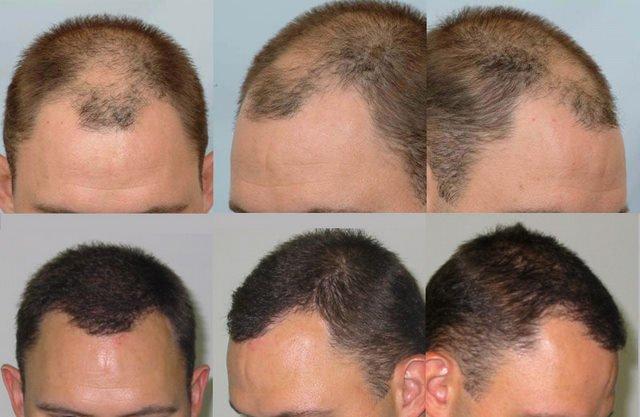
Hair loss is one of the most emotionally challenging experiences a person can face. Whether it begins in your twenties or progresses gradually over the years, thinning hair and receding hairlines affect confidence, self-image, and quality of life. The good news is that modern medicine has made permanent hair restoration more accessible and effective than ever before. Karachi, Pakistan’s largest city, has emerged as a leading destination for hair restoration procedures, with world-class clinics, internationally trained surgeons, and cutting-edge techniques available at a fraction of the cost compared to Western countries. This guide covers everything you need to know to find the best hair transplant in Karachi — from understanding hair loss and available techniques to comparing top clinics, costs, and what to expect before, during, and after your procedure.
Understanding Hair Loss: Causes and Types
Before exploring treatment options, it helps to understand why hair loss happens and whether a transplant is the right solution for your specific condition. Hair loss is rarely one-size-fits-all — the cause directly influences which treatment will work best.
Common Causes of Hair Loss
- Genetics (Androgenic Alopecia) — The most common cause in both men and women; hair follicles are sensitive to DHT (dihydrotestosterone), causing gradual miniaturization.
- Hormonal Imbalances — Thyroid disorders, pregnancy, or PCOS can trigger excessive shedding.
- Nutritional Deficiencies — Low iron, protein, zinc, or biotin levels weaken hair at the root.
- Chronic Stress (Telogen Effluvium) — Physical or emotional trauma pushes hair follicles into a resting phase.
- Scalp Conditions — Fungal infections, seborrheic dermatitis, or scarring alopecia damage follicles.
- Medical Treatments — Chemotherapy, radiation, or certain medications can cause hair thinning.
- Poor Hair Care Habits — Overuse of heat styling, chemical treatments, or tight hairstyles.
Types of Hair Loss
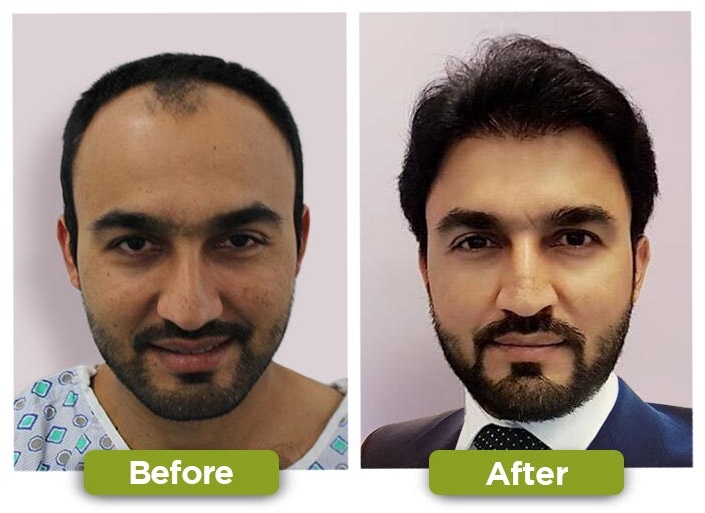
- Male Pattern Baldness (Androgenic Alopecia) — Follows the Norwood Scale (Stage 1–7); starts at the temples and crown.
- Female Pattern Hair Loss — Diffuse thinning across the top of the scalp, classified by the Ludwig Scale.
- Alopecia Areata — Patchy, unpredictable hair loss caused by an autoimmune response.
- Traction Alopecia — Caused by repetitive tension on hair from tight styles.
- Scarring Alopecia — Permanent follicle damage from inflammation or injury.
Who Is a Good Candidate for a Hair Transplant?
- Adults aged 25 and above with stable hair loss patterns.
- Sufficient donor hair density at the back and sides of the scalp.
- Realistic expectations about results — density improvement, not full original coverage.
- No active scalp disease, uncontrolled diabetes, or blood clotting disorders.
- Non-smokers or those willing to quit before and after surgery for better graft survival.
Hair Transplant Techniques Available in Karachi
Karachi’s top clinics offer a full range of modern hair restoration techniques. Understanding the differences helps you have an informed conversation with your surgeon and choose the method best suited to your hair loss stage, lifestyle, and budget.
FUE – Follicular Unit Extraction
- FUE is the most widely performed hair transplant method in Karachi. Individual follicular units (groups of 1–4 hairs) are extracted one by one from the donor area using a micro-punch tool, then implanted into the recipient area. It leaves no linear scar, has a shorter recovery time, and produces natural-looking results.
FUT – Follicular Unit Transplantation
- FUT involves removing a thin strip of scalp from the donor area, from which follicular units are then dissected and implanted. It allows for a higher graft yield in a single session and is often recommended for patients needing extensive coverage, though it does leave a linear scar.
DHI – Direct Hair Implantation
- DHI uses a specialized Choi Implanter Pen to extract and implant hair follicles simultaneously without creating pre-made incisions. This results in higher density, minimal trauma to existing hair, and faster healing — making it ideal for patients who want to fill in areas where they still have some hair.
ICE FUE – Advanced FUE with Cooling Technology
- ICE FUE is a premium variation of FUE in which extracted grafts are stored in a temperature-controlled solution to maximize follicle survival rates. Some Karachi clinics, such as AlKhaleej Clinics, specialize in this technique, which improves overall graft viability and success rates.
PRP Therapy – Platelet-Rich Plasma
- PRP is not a transplant but a complementary non-surgical treatment. Platelet-rich plasma derived from the patient’s own blood is injected into the scalp to stimulate dormant follicles, improve hair thickness, and accelerate healing after a transplant. Many Karachi clinics include PRP as part of their post-transplant care protocol.
Technique Comparison at a Glance
| Feature | FUE | FUT | DHI | ICE FUE |
|---|---|---|---|---|
| Scarring | Tiny dot scars | Linear scar | Minimal dots | Minimal dots |
| Graft Yield (per session) | 1,500–4,000+ | 2,000–5,000+ | 1,000–3,000 | 1,500–4,000+ |
| Recovery Time | 7–10 days | 10–14 days | 5–7 days | 7–10 days |
| Best For | Most patients | Large bald areas | Density & existing hair | Premium results |
| Cost in Karachi | Moderate | Lower | Higher | Higher |
| Pain Level | Low | Moderate | Low | Low |
| Natural Look | Excellent | Good | Excellent | Excellent |
Best Hair Transplant Clinics in Karachi
Karachi is home to dozens of hair restoration clinics, but only a handful combine surgical expertise, modern equipment, patient safety standards, and consistent results. Below are the most reputable and well-established options.
| Clinic Name | Location | Techniques | Key Strength |
|---|---|---|---|
| Advanced Hair Transplant & Cosmetic Surgery (AHTCS) | Clifton, Khayaban-e-Iqbal | FUE, PRP, Cosmetic Surgery | 35+ years of surgical expertise under Prof. Dr. Mirza Shehab Afzal Beg |
| Laser Inn Aesthetics (LIASC) | Clifton, near South City Hospital | FUE, Body Contouring | Internationally renowned Dr. Zulfiqar Tunio; thousands of satisfied patients including celebrities |
| AlKhaleej Clinics | Multiple branches, Karachi | ICE FUE, DHI, Exosomes | Pakistan’s No.1 aesthetic brand; advanced cooling technology for premium graft survival |
| Hair Club Pakistan | Karachi branch | FUE, Body Hair, Eyebrow & Eyelash Transplant | Asia’s No.1 FUE clinic; specialists in single follicular unit transplants |
| HASH Clinics | Karachi | FUE, Hair Treatments | State-of-the-art facilities; stitch-free and painless procedures; highly rated by patients |
| Derm MD Care | Gulshan-e-Iqbal & Clifton | FUE, Laser, Aesthetic Treatments | Dr. Syed Adeel Ur Rehman; multiple accessible locations across Karachi |
Top Hair Transplant Surgeons in Karachi
The surgeon performing your procedure is arguably the most important factor in achieving natural, lasting results. Here are some of the most qualified and well-regarded hair transplant surgeons practising in Karachi today.
- Prof. Dr. Mirza Shehab Afzal Beg (AHTCS) — MBBS, FRCS (Ire), Dip Plast (UK), FRCS Plast (UK). Over 35 years of experience. Head of Plastic & Reconstructive Surgery at Liaquat National Hospital. Trained extensively in the UK.
- Dr. Zulfiqar H. Tunio (Laser Inn Aesthetics) — Internationally recognized for FUE hair restoration. Has performed thousands of successful procedures, including for celebrity clients such as Raheem Shah and Sohail Hashmi.
- Dr. Syed Adeel Ur Rehman (Derm MD Care) — Dermatologist, Cosmetic Surgeon, and Hair Transplant Specialist practising at multiple Karachi locations including Gulshan-e-Iqbal and Clifton.
- Dr. Shamail Zia — Hair transplant surgeon practising at South City Hospital, Nehal Hospital, and Darul Sehat Hospital; broad hospital network across Karachi.
- Dr. Adil Hamayun — Aesthetic physician and hair transplant surgeon with multi-clinic presence; also practises in major hospital settings.
What Credentials to Look For in a Surgeon
- MBBS from a recognized medical institution
- FCPS (Fellowship of the College of Physicians and Surgeons, Pakistan) in Dermatology or Plastic Surgery
- FRCS or Dip Plast for UK-trained surgeons
- Membership in the International Society of Hair Restoration Surgery (ISHRS)
- Verifiable before-and-after patient galleries
- Active practice at an accredited hospital or recognized clinic
Hair Transplant Cost in Karachi
Cost is one of the first questions most patients ask — and rightly so. Pricing in Karachi is significantly more affordable than in the UK, US, or even Turkey, without compromising on quality at reputable clinics. However, the final price depends on several variables.
Factors That Affect the Cost
- Number of Grafts Required — More extensive hair loss requires more grafts, increasing cost
- Technique Used — DHI and ICE FUE cost more than standard FUE; FUT is generally the least expensive
- Surgeon’s Experience and Reputation — Senior surgeons with international credentials charge premium rates
- Clinic Infrastructure — Advanced facilities with modern equipment and hygienic standards come at a higher price
- Inclusion of PRP Therapy — Some packages include post-op PRP sessions; others charge separately
- Location of the Clinic — Clinics in upscale areas like Clifton or DHA may price higher than those in other districts
Cost Breakdown by Graft Count
| Graft Count | Hair Loss Stage | Estimated Cost (PKR) | Approx. USD |
|---|---|---|---|
| 1,000 – 1,500 grafts | Early / Mild Baldness | PKR 80,000 – 130,000 | $280 – $465 |
| 1,500 – 2,500 grafts | Moderate Baldness | PKR 120,000 – 180,000 | $430 – $645 |
| 2,500 – 3,500 grafts | Advanced Baldness | PKR 160,000 – 230,000 | $570 – $820 |
| 3,500 – 5,000 grafts | Extensive Coverage | PKR 200,000 – 300,000+ | $715 – $1,075+ |
| 5,000+ grafts | Full Scalp Coverage | PKR 280,000 – 400,000+ | $1,000 – $1,430+ |
Note: Most reputable clinics in Karachi offer free initial consultations. During this session, your surgeon will assess your donor density, estimate the exact graft count needed, and provide a transparent, personalised quote. Pricing may evolve in coming years due to inflation and advances in transplant technology — consult your clinic directly for the most current rates.
The Hair Transplant Procedure: Step by Step
Knowing what will happen on the day of your surgery removes anxiety and helps you prepare effectively. Here is a complete breakdown of what to expect.
| Step | What Happens | Duration |
|---|---|---|
| 1. Consultation & Assessment | Scalp analysis, donor density check, hairline design discussion, graft count estimate | 30–60 mins |
| 2. Hairline Design | Surgeon marks the new hairline based on your face shape and hair loss pattern; your approval is taken | 15–30 mins |
| 3. Local Anaesthesia | Numbing injections applied to the donor and recipient areas — brief discomfort, no general anaesthesia required | 10–20 mins |
| 4. Donor Area Preparation | Donor area (back/sides of scalp) is shaved and prepared for extraction | 15–20 mins |
| 5. Graft Extraction | Individual follicles extracted using a micro-punch (FUE/ICE FUE) or strip method (FUT) | 2–5 hours |
| 6. Graft Preparation | Extracted follicles sorted and inspected under a microscope by a trained team | Ongoing |
| 7. Channel Creation | Tiny incisions made in the recipient area where grafts will be placed | 1–2 hours |
| 8. Implantation | Prepared grafts carefully placed into incisions at the correct angle and direction | 2–4 hours |
| 9. Post-Procedure Dressing | Scalp cleaned, anti-bacterial ointment applied, donor area bandaged | 15–30 mins |
| 10. Instructions & Follow-Up | Detailed aftercare instructions given; follow-up appointment scheduled | 20–30 mins |
Total procedure time typically ranges from 6 to 10 hours depending on the number of grafts. The process is performed entirely under local anaesthesia, meaning you remain awake but feel no pain throughout.
Recovery Timeline and Aftercare
Proper aftercare is just as important as the surgical procedure itself. Following your surgeon’s instructions carefully will directly impact graft survival and the quality of your final results.
Week-by-Week Recovery Timeline
- Days 1–3: Mild swelling around the forehead and eyes; redness and scabbing in recipient area — completely normal.
- Days 4–7: Scabs begin to form and dry naturally; sleep elevated to reduce swelling; avoid touching or scratching the scalp.
- Week 2: Scabs fall off gradually; recipient area may appear pink; donor area heals quickly.
- Weeks 3–6: Shock loss occurs — transplanted hair falls out, which is a normal and temporary phase.
- Months 3–4: New hair begins to emerge; fine, thin strands appear in the transplanted areas.
- Months 6–9: Noticeable hair growth; texture and thickness improve progressively.
- Months 12–18: Full, mature results visible — this is when the final density and appearance are evaluated.
Aftercare Do’s and Don’ts
| Do’s ✅ | Don’ts ❌ |
|---|---|
| Follow your surgeon’s medication schedule (antibiotics, anti-inflammatories) | Do not scratch, rub, or pick at the scalp |
| Sleep with your head elevated at 45° for the first week | Avoid direct sun exposure for at least 4 weeks |
| Wash hair gently with prescribed shampoo after 48–72 hours | No swimming, sauna, or steam rooms for 4 weeks |
| Stay hydrated and eat a protein-rich diet to support healing | Avoid alcohol and blood-thinning medications post-surgery |
| Attend all scheduled follow-up appointments | No intense exercise or heavy lifting for 2 weeks |
| Protect the scalp with a loose hat when outdoors after week 2 | Do not colour or chemically treat hair for 3 months |
Risks and Realistic Expectations
A hair transplant is a surgical procedure, and like all surgeries, it carries a degree of risk. Choosing a qualified, experienced surgeon at a reputable clinic significantly reduces these risks.
Possible Risks and How to Minimise Them
- Infection — Rare when sterile surgical environments are maintained and post-op antibiotics are used.
- Poor Graft Survival — Can result from improper handling; ICE FUE techniques improve survival rates.
- Unnatural Hairline — Caused by poor design or improper angle/direction of implantation; always verify the hairline design before proceeding.
- Scarring — Dot scars from FUE are virtually invisible; FUT leaves a linear scar that requires longer hair to conceal.
- Shock Loss of Existing Hair — Some surrounding native hair may temporarily shed but typically regrows.
- Cyst Formation — Small, temporary cysts can appear in the recipient area; usually resolve on their own.
- Overharvesting the Donor Area — An inexperienced surgeon may over-extract, causing visible thinning at the back of the head.
Setting Realistic Expectations
- A hair transplant improves density and coverage — it does not give you the hair volume you had at age 18.
- Ongoing hair loss in non-transplanted areas may require future touch-up sessions.
- Results vary based on existing donor density, age, and hair loss progression.
- Full results take 12–18 months — patience is essential.
- Most patients achieve a dramatically improved, natural-looking hairline that permanently transforms their appearance.
Why Karachi Is a Leading Destination for Hair Transplants
Karachi has firmly established itself as one of South Asia’s top destinations for hair restoration. Several factors make it an attractive choice for both local patients and those travelling from other cities or countries.
- Internationally Trained Surgeons — Many of Karachi’s leading hair transplant specialists hold UK, US, or European qualifications and bring global standards to their practice.
- Advanced Techniques Available — FUE, DHI, ICE FUE, PRP, and robotic-assisted options are available at top-tier clinics.
- Cost Advantage — Procedures cost a fraction of what they would in the UK (£3,000–£10,000), Turkey ($1,500–$4,000), or India, without sacrificing quality.
- Established Medical Infrastructure — South City Hospital, Liaquat National Hospital, and numerous specialized clinics provide a robust ecosystem.
- Growing Medical Tourism — Patients from other Pakistani cities and the Pakistani diaspora abroad increasingly choose Karachi for hair transplants.
- Free Consultations — Most reputable clinics offer free first consultations, making it easy to compare options before committing.
How to Choose the Right Clinic: A Practical Checklist
With so many clinics in Karachi offering hair transplant services, knowing what to look for protects you from making a costly mistake. Use this checklist before booking any procedure.
- Verify the surgeon’s qualifications — MBBS, FCPS, FRCS, or ISHRS membership are strong indicators of credibility.
- Review before-and-after photos — Ask to see real patient results, not stock images.
- Ask about the technique — A reputable surgeon will explain why a specific method is recommended for your case.
- Confirm who performs the surgery — Ensure the senior surgeon, not a technician, handles the extraction and implantation.
- Assess the facility — Operating rooms should be sterile, properly equipped, and meet basic medical safety standards.
- Check patient reviews — Google reviews, Facebook, and Zocdoc/oladoc listings offer unfiltered patient experiences.
- Request a transparent price breakdown — No hidden fees; the quote should clearly state graft count, technique, medication, and follow-up costs.
- Evaluate communication quality — A good clinic responds promptly, answers your questions thoroughly, and does not pressure you into booking.
- Confirm post-op support — You should have access to your surgeon or a medical team during the recovery period.
Hair restoration in Karachi has reached a level of quality and sophistication that rivals international standards. Whether you are in the early stages of hair thinning or dealing with advanced baldness, a permanent and natural-looking solution is well within reach. The key is choosing the right clinic and surgeon — not just the cheapest option — and following through with proper aftercare.
Take time to consult with at least two or three qualified surgeons before making a decision. Most top clinics in Karachi offer free consultations, giving you the opportunity to compare approaches, pricing, and results without any commitment. Hair restoration is a long-term investment in your confidence and well-being — and when done correctly, the results are truly life-changing.
FAQs
Is a hair transplant permanent?
Yes. Hair follicles transplanted from the donor area (back and sides of the scalp) are genetically resistant to DHT — the hormone responsible for male pattern baldness. Once transplanted, these follicles continue to grow hair for a lifetime. However, hair loss may continue in areas that were not transplanted, which may require additional sessions over time.
What is the minimum age for a hair transplant in Karachi?
Most surgeons recommend waiting until the age of 25 or later. This is because hair loss patterns are not fully established in younger patients, and transplanting too early can result in an unnatural appearance as the surrounding hair continues to thin. Younger patients are generally advised to manage hair loss medically first.
Can women get a hair transplant in Karachi?
Yes. Female hair transplants are performed in Karachi, particularly for women experiencing female pattern hair loss (diffuse thinning at the crown), traction alopecia from tight hairstyles, or hairline lowering. The technique and candidacy criteria differ slightly from male procedures, making a specialist consultation essential.
Does a hair transplant hurt?
The procedure is performed under local anaesthesia, so you will feel little to no pain during surgery. The anaesthesia injections themselves may cause brief, mild discomfort. Post-operatively, patients typically experience mild soreness and tightness in the donor area for 3–5 days, which is managed effectively with prescribed pain relief.
How many sessions are needed?
For most patients with moderate hair loss, a single session is sufficient. Patients with extensive baldness or very fine hair may benefit from two sessions spaced 12–18 months apart to achieve desired density. Your surgeon will advise based on your donor supply and coverage goals.
What is the difference between FUE and DHI?
FUE extracts grafts and then creates recipient site incisions separately before implanting. DHI uses a Choi Pen to extract and implant simultaneously, without pre-made incisions. DHI generally offers higher density, faster healing, and is better for patients with existing hair they want to preserve. FUE covers larger areas more cost-effectively.
How long does recovery take?
Most patients return to desk work within 3–5 days. Visible scabbing resolves within 10–14 days. Redness fades within 2–4 weeks. Physical exercise can resume after 2 weeks. Full, mature hair growth results are visible at 12–18 months.

My sar pr samny ki trf dono trf baal ni hyn main b hair transpalnt krwana chahta hun ..kya ap mujhy bta skty hyn k yeh kysy ho ga aur kitny pysy lgyn gy…I a Waiting