For nearly 18 years, Basant was effectively banned in Pakistan, especially in Punjab’s urban centers, due to safety concerns and rising casualties linked to kite strings coated with sharp materials like glass and metal.
In December 2025, the Punjab government passed the Punjab Kite Flying Ordinance 2025, officially lifting many of the previous restrictions and paving the way for a controlled revival of Basant.
Under this ordinance:
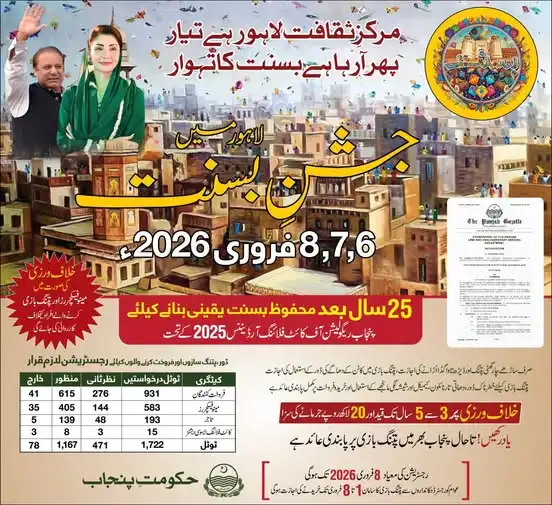
- The traditional Basant festival was approved to be celebrated from February 6 to 8, 2026, in Lahore.
- Kite flying was allowed only under strict safety conditions — marking a landmark policy shift.
This decision reflects both a respect for cultural heritage and an awareness of the modern need for safety and regulation — balancing celebration with civic responsibility.
What Basant Represents: Culture, Community, and Colour
Basant is more than just flying kites. It’s a spring festival deeply rooted in Punjabi culture, traditionally marking:
- The end of winter and the start of spring, a season associated with growth and renewal.
- A celebration of community, togetherness, and outdoor joy.
- A cultural symbol seen in music, poetry, and popular memory throughout the region.
In Lahore — historically the heart of Basant in Pakistan — this festival once drew thousands of kite flyers and spectators onto rooftops and open spaces, all eager to participate in friendly competitions of skill, strategy, and wind-borne artistry.
Basant 2026: What Is Allowed — And What Is Not
The 2026 iteration of Basant comes with strict, enforceable guidelines designed to make the festival safer than ever while preserving its cultural essence.
Key Safety and Regulatory Rules (2026)
| Regulation | Description |
|---|---|
| Dates of permitted kite flying | February 6–8, 2026 |
| Sale period for kites and strings | February 1–8, 2026 |
| Manufacturing of kite material | Allowed from December 30, 2025 onwards with registration |
| Banned materials | All hazardous kite string (nylon, plastic, metal, chemical-coated), spools (“charkhi”) |
| Mandatory QR codes | All kites and strings must have QR codes for traceability |
| Restrictions on minors | Children under 18 are not permitted to fly kites alone |
| Motorcycle safety rules | Bikes require safety antennas or wires to prevent injuries from kite strings |
| Penalties for violations | Severe fines (up to Rs2 million) and possible prison sentences for non-compliance |
These regulations reflect careful consideration by authorities to protect public safety while permitting celebration.
How the City of Lahore Is Preparing
Preparation for Basant 2026 has been both methodical and community-oriented:
- City authorities have launched registration systems via official digital platforms to track kite and string sales.
- Safety campaigns encourage motorcyclists to install protective wiring on their vehicles to reduce injuries.
- Standard Operating Procedures (SOPs) have been issued to local administrators, police, kite associations, and vendors to ensure proper compliance.
Through this effort, Lahore aims to show that Basant can be a safe, orderly, and cherished cultural event, rather than a public hazard.
What to Expect During the Festival Days
If you plan to attend Basant 2026 in Lahore — as a local resident or visitor from elsewhere in Pakistan — here’s what you can expect:
The Skyline
For the first time in years, rooftops, parks, and open terraces across Lahore will come alive with:
- Colourful kites fluttering against clear blue skies.
- Friendly kite battles between neighbors, families, and volunteers.
- Excited crowds sharing food, music, and laughter.
The Atmosphere
Though celebrations promise a festive mood, authorities will enforce restrictions on:
- Aerial firing and unruly behavior.
- Religious or political symbols on kites, which have been banned province-wide to prevent potential tensions.
This ensures Basant remains a cultural, not confrontational, experience.
Making Basant Safe and Enjoyable: Tips for Participants
Whether you’re a seasoned Basant fan or a first-time attendee, here are some practical tips to make your experience smoother and safer:
- Respect the regulations — fly kites only on the permitted dates and follow safety protocols.
- Use only approved kite string (cotton) with QR codes for traceability.
- Avoid crowded rooftops without proper safety measures.
- Watch out for traffic and obstructions while running after kites.
- Supervise children closely, as flying kites in a regulated environment requires responsibility.
Celebrating with safety in mind not only protects you but also helps build trust for continuing Basant in future years.
Why This Revival Matters in 2026
The return of Basant in 2026 isn’t just a seasonal occurrence — it’s a cultural milestone. After years of absence in many urban areas, the festival’s comeback reflects:
- Cultural resilience and pride in Punjabi traditions.
- Government willingness to innovate on public safety and celebration.
- Community enthusiasm that continues to give Basant meaning across generations.
For many Pakistanis, Basant 2026 represents not only colorful skies — but also a hopeful move toward responsible, communal joy.
Frequently Asked Questions
1. When is Basant 2026 being celebrated?
Basant 2026 will take place from February 6 to 8, 2026, with kite-flying permitted on those three days in Lahore.
2. Can anyone fly kites anywhere in Punjab?
No — kite flying in 2026 is officially permitted only within Lahore city limits under strict regulations.
3. Are there safety rules for kite strings?
Yes. Only cotton strings with QR codes are allowed; hazardous strings (nylon, metal, chemical-coated) are banned.
4. Are children allowed to fly kites?
Individuals under 18 are generally not permitted to fly kites alone and must follow safety guidelines.
5. What penalties apply for rule violations?
Penalties include heavy fines and possible imprisonment for using banned materials or non-compliance with festival regulations.
6. Is Basant only about kite flying?
While flying kites is central, Basant also embodies spring celebration, social gatherings, music, and traditional festivities.
Basant 2026 marks a historic return of one of Pakistan’s most loved cultural festivals. After nearly two decades of restricted kite flying, the skies over Lahore will once again echo with laughter, colors, and the spirited dance of kites. But this year’s revival isn’t just about excitement — it’s about safe celebration, cultural respect, and shared responsibility.